Brief scientific biography of Marcelo Moncayo Theurer and achievements, experience, mathematical models
Marcelo Moncayo Theurer is a distinguished civil engineer, researcher, and professor, recognized for his groundbreaking contributions to structural engineering and mathematical modeling. With a career spanning decades, he has played a pivotal role in advancing seismic design, structural dynamics, and finite element methods, shaping the future of engineering through innovation and academic excellence.
His expertise extends beyond research, as he has led multi-million-dollar infrastructure projects, bridging the gap between scientific theory and real-world application. Through his published works and mathematical models, he has provided valuable insights that continue to influence engineering methodologies worldwide.
Discover the achievements, experience, and pioneering models that define his legacy. Explore how his work has transformed the field of civil engineering and inspired future generations of scientists and engineers.
With over 30 years of teaching experience, including 10 years as a university professor, I have cultivated deep expertise in civil engineering, structural analysis, and seismic design. My career encompasses leading large-scale infrastructure projects, totaling $200 million in construction and $20 million in consultancy, showcasing a unique ability to merge academia with real-world engineering innovation.
By bridging engineering practice, cutting-edge research, and higher education, I have contributed to advancing structural methodologies, optimizing seismic-resistant designs, and mentoring future engineers through comprehensive academic instruction and field expertise.


Professional Experience of Marcelo Moncayo Theurer: Leadership and Innovation in Civil Engineering
Throughout my career, I have demonstrated a unique ability to develop advanced mathematical models, driving engineering innovation and solving real-world structural challenges. As an Associate Professor at the University of Guayaquil, I specialize in structural engineering, seismic design, structural dynamics, earthquake engineering, and finite element methods, contributing to the academic and professional growth of future engineers.
My teaching portfolio spans a diverse range of subjects, including statics, reinforced concrete design, numerical analysis, and physics, ensuring a comprehensive learning experience for students across academic levels. This versatility in instruction allows me to mentor aspiring engineers, fostering a deep passion for scientific research and technological advancements in civil engineering.
By integrating cutting-edge methodologies and promoting innovative problem-solving, I continue to push the boundaries of engineering education, equipping the next generation of scientists with the knowledge and skills needed to address complex structural challenges worldwide.
Academic Excellence and Innovative Mathematical Models in Engineering: The Career of Marcelo Moncayo Theurer
With 24 years of experience in civil engineering, Marcelo Moncayo Theurer has led groundbreaking infrastructure projects, shaping Ecuador’s urban landscape and advancing structural innovation. His achievements include:
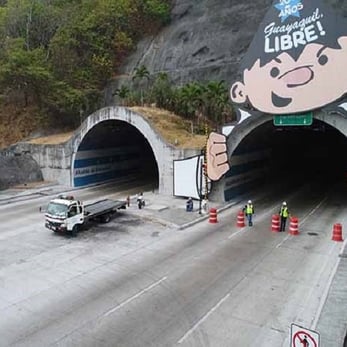
Directing Ecuador’s largest road tunnel project, optimizing transportation efficiency.
Designing skyscrapers, the nation’s longest bridge, and multiple three-tier bridges, redefining architectural standards.
Leading the construction of over 400 streets, alongside critical irrigation and rainwater systems, enhancing urban development.
At the core of his contributions lies his dedication to mathematical modeling, pioneering engineering methodologies that have transformed the industry:
Seismic models, recognized nationwide, accurately predicted Ecuador’s seismic reactivation phase, including the 2016 Manabí earthquake.
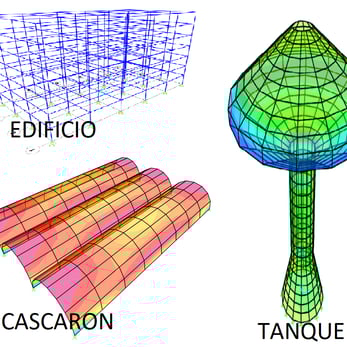
Finite element models that simulate soil dynamics and structural behavior, improving safety and resilience in infrastructure design.
Attenuation laws and predictive models addressing global challenges in earthquake engineering, offering insights into seismic vulnerability and damage mitigation.
Marcelo Moncayo Theurer’s scientific expertise and engineering leadership continue to shape the future of civil engineering, ensuring innovation, safety, and sustainability in modern infrastructure.
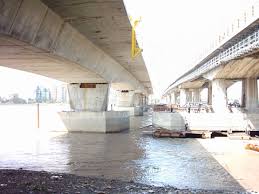
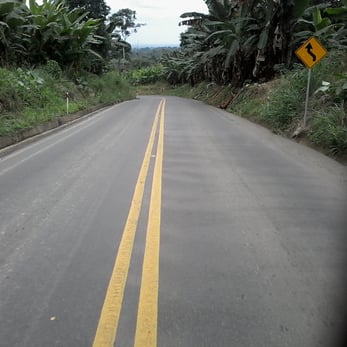
Experience in Relevant Engineering Projects: The Impact of Marcelo Moncayo Theurer in Civil Engineering
Honors Received by Marcelo Moncayo Theurer for His Contributions to Science
Marcelo Moncayo Theurer’s groundbreaking contributions to civil engineering and scientific research have earned him prestigious awards from Ecuador’s Congress and widespread recognition in leading media outlets. His dedication to innovation, education, and scientific advancement has positioned him as a key figure in his field, with accolades that highlight his impact on society.
Beyond his academic and professional achievements, Marcelo Moncayo Theurer actively engages with the public through social media, where he shares valuable knowledge and insights with a growing audience of over 100,000 followers. Through digital platforms, he continues to inspire, educate, and foster meaningful discussions on the future of engineering and science.
Explore his latest publications and media features to learn more about his remarkable legacy and influence in the scientific community.
You didn’t come this far to stop
Write a short text about your service
Write a short text about your service
Write a short text about your service
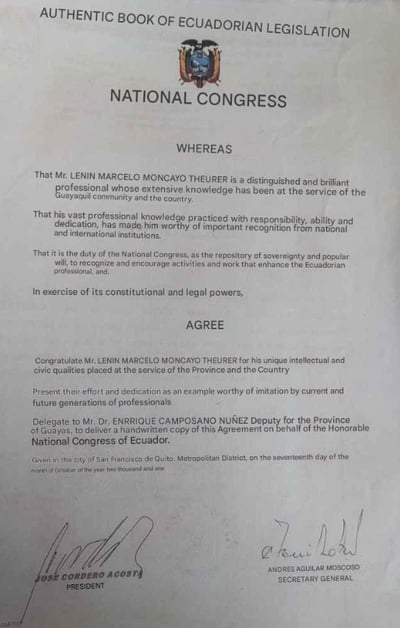
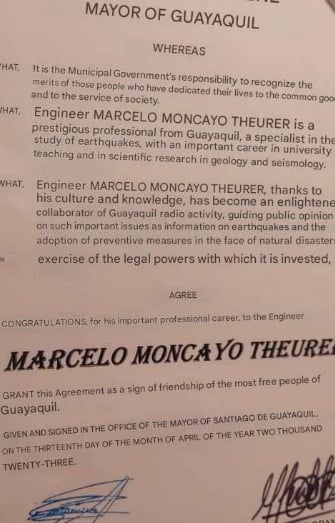

"Award of Merit granted by the Honorable National Congress of the Republic of Ecuador in recognition of the determination of Ecuador's seismic reactivation."
"Award of Merit granted by the Distinguished Municipality of Guayaquil in recognition of tireless efforts for the benefit of Ecuadorian society, focusing on disaster prevention in the seismic and solar fields, and contributing to the saving of lives."
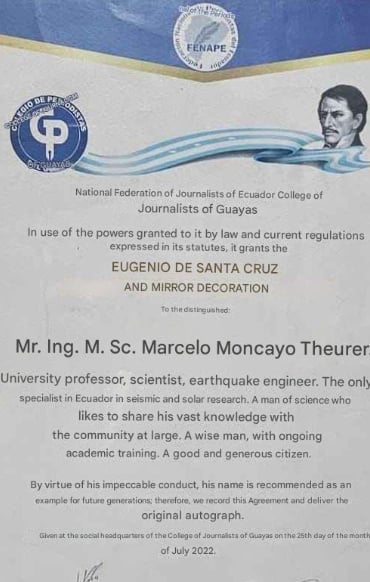
"Distinction of Merit 'Eugenio de Santa Cruz y Espejo,' awarded by the College of Journalists of Ecuador, in recognition of consistent efforts to inform Ecuadorian society about disaster prevention in the seismic and solar fields, and for contributing to the saving of lives."
Mathematical Models Proposed by Marcelo Moncayo Theurer: Innovations and Applications
A short list of the mathematical models I have promoted in my career.
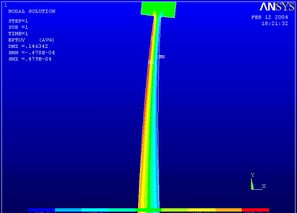
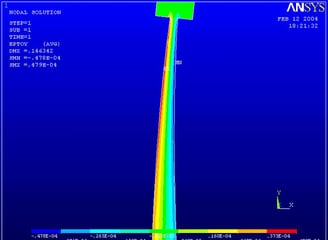
New Natural Period Formulation: Insights
from Marcelo Moncayo Theurer
Marcelo Moncayo Theurer has developed the innovative Natural Period Formulation, a revolutionary mathematical model that optimizes the analysis of dynamic systems and structures. This formula enables precise calculations of the natural period in various scientific and engineering applications, offering an advanced approach to the stability and behavior of physical and structural models.
Due to its accuracy and utility, the Natural Period Formulation has become a key reference in applied mathematics studies, structural engineering, and complex systems dynamics.
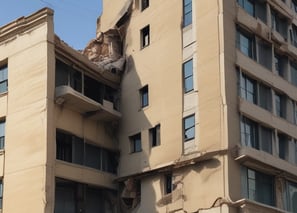

Spacing Between Buildings: A Pioneering Mathematical Formula
by Marcelo Moncayo Theurer
Soil Springs: A Pioneering Mathematical Model
by Marcelo Moncayo Theurer
Mathematical Model for Dynamic Soil Simulation Under Guayaquil University: A Groundbreaking Innovation
by Marcelo Moncayo Theurer
Marcelo Moncayo Theurer has developed the Spacing Between Buildings formula, an advanced mathematical model designed to optimize urban planning and architectural design. This innovative approach enables precise calculations for ideal building separation, enhancing structural integrity, environmental efficiency, and urban sustainability.
With increasing urban density, the Spacing Between Buildings formula provides essential insights for architects, engineers, and city planners, ensuring safety, airflow, sunlight exposure, and disaster resilience in modern construction projects. By integrating this model, professionals can refine urban layouts, reduce heat islands, and improve overall city functionality.
Marcelo Moncayo Theurer has introduced a new Soil Springs formulation, an innovative mathematical model that enhances the accuracy of soil-structure interaction analysis. This advanced approach allows engineers and researchers to simulate ground behavior with greater precision, improving foundation stability, seismic response, and geotechnical engineering applications.
The Soil Springs model provides essential insights for civil and structural engineers, optimizing the design of buildings, bridges, and other infrastructure to withstand various environmental and load conditions. By integrating this formulation, professionals can refine predictive models, enhance earthquake resilience, and ensure long-term structural integrity.
Marcelo Moncayo Theurer has developed an advanced mathematical model for dynamic soil simulation specifically designed to analyze the behavior of the ground beneath Guayaquil University. This innovative approach enhances geotechnical assessments by providing accurate predictions of soil responses under various environmental and structural conditions.
The model plays a crucial role in improving urban planning, foundation stability, and seismic resilience. By integrating this formulation, professionals can refine predictive models, mitigate risks, and enhance long-term structural integrity.

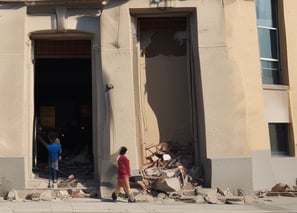
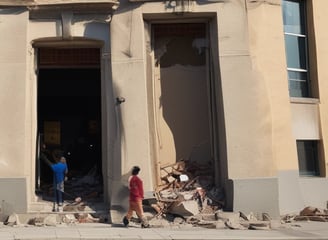
Method to Assess the Seismic Vulnerability of Structures: A Revolutionary Approach
by Marcelo Moncayo Theurer
Marcelo Moncayo Theurer has developed an innovative method to assess the seismic vulnerability of structures, providing engineers and researchers with a cutting-edge approach to evaluating structural resilience in earthquake-prone regions. This advanced model integrates key parameters to predict building behavior under seismic forces, optimizing safety and risk mitigation strategies.
By utilizing this method, professionals can enhance infrastructure durability, refine construction techniques, and implement proactive measures to safeguard buildings against potential seismic threats. The seismic vulnerability assessment model is a crucial tool for urban planning, disaster preparedness, and structural engineering, contributing to safer and more resilient cities worldwide.
The Five Updated Attenuation Laws: A Revolutionary Contribution
by Marcelo Moncayo Theurer
Seismic Energy Released
Seismic hazard
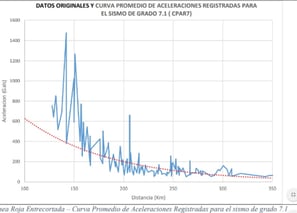
Marcelo Moncayo Theurer has introduced five updated attenuation laws, redefining the principles governing wave behavior, energy dissipation, and structural resilience in various scientific and engineering applications. This groundbreaking model enhances predictive accuracy in fields such as seismic analysis, acoustics, and structural engineering, offering a modernized approach to attenuation dynamics.
The updated attenuation laws provide researchers and professionals with cutting-edge tools to optimize designs, improve safety measures, and refine mathematical models for better real-world applications. By integrating these laws, experts can enhance simulations, mitigate risks, and develop more efficient structural and environmental solutions.
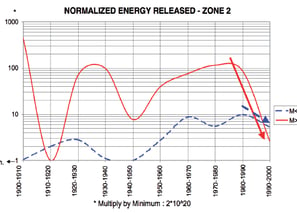
I also created a method known as Seismic Energy Released, which facilitates the analysis of seismic behavior through predictive curves. This approach has yielded exceptional results in forecasting stages of seismic reactivation.
Furthermore, I developed a method to assess seismic hazard to design structures, parallel with seismic standards NEC-2015 in Ecuador:



Reduced Intersection Method
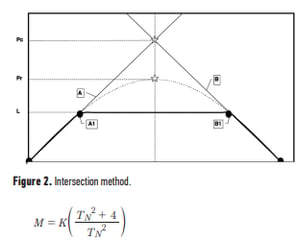
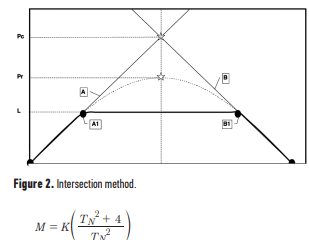
Another of my contributions is a reconstruction method for seismic waves, specifically for instances where accelerometer data truncates wave peaks. This method is called the Reduced Intersection Method. See the Research on Dialnet
Synthetic seismic waves
Desk protector from collapse
Energy-dissipating elements
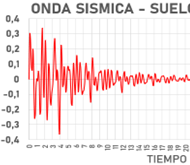
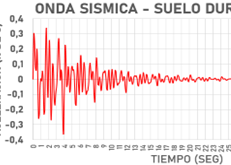
I have also designed a method to generate synthetic seismic waves based on specific frequency requirements, tailored to individual needs. Here there is an example of a synthetic accelerogram generated for the hard soil of Ecuadorian standart Spectra NEC 2015:
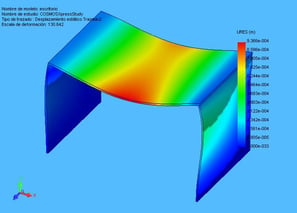
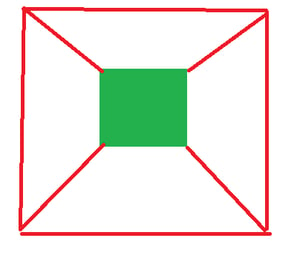
I have created elements, such as a bed or desk, capable of protecting a person's life in the event of a building collapsing
Additionally, I have developed energy-dissipating elements to be integrated into buildings, enhancing their structural resilience against seismic events.
Publications and Research Leadership
I have authored 18 books, 15 of which are available on Amazon, and lead 30 research groups per semester, mentoring students in innovative projects that tackle practical engineering challenges. (See: Books on Amazon)
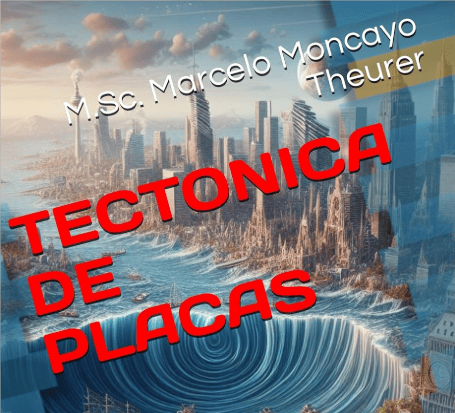
Books Written by Marcelo Moncayo Theurer: Contributions to Civil Engineering and Scientific Research
Books published in the area of structural dynamics
8 books in the area
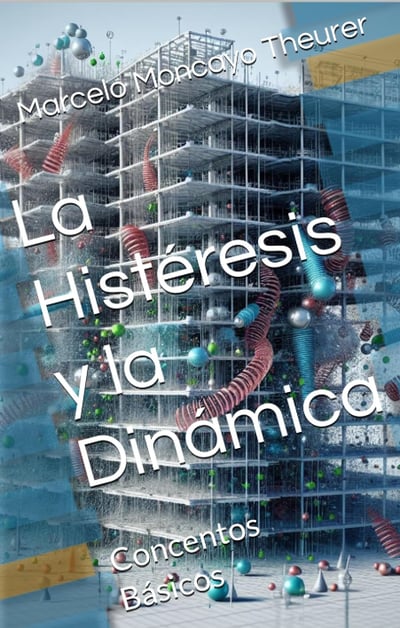
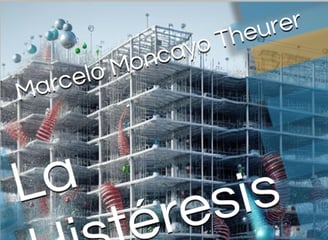
La Histéresis y la Dinámica
Hysteresis and Dynamics: Basic Concepts (Structural Dynamics No. 1) (Spanish Edition) Available on Amazon
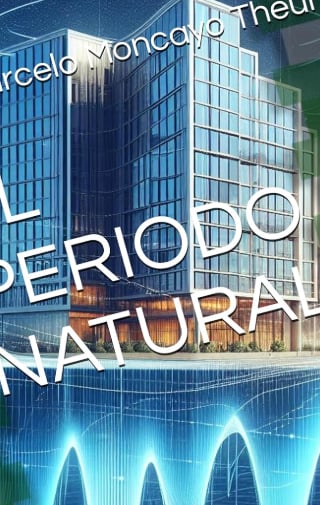

EL PERIODO NATURAL : FORMULAS INEDITAS
El campo Magnético Debilitado
THE NATURAL PERIOD: UNPUBLISHED FORMULAS (Structural Dynamics No. 2) (Spanish Edition) Available on Amazon
The Weakened Magnetic Field: Reasons (EARTHQUAKE ENGINEERING AND RELEASED ENERGY No. 3) (Spanish Edition) Available on Amazon


Visit the SIMON KEPLER Laboratory, a seismic and solar observatory that analyzes solar climate and seismic behavior to fine-tune predictive mathematical models. (See the Observatory page)
LABORATORY CIMON KEPLER
Observatory connected to NASA, NOAA and USGS to monitor the planet and feed mathematical models
Academic Qualifications
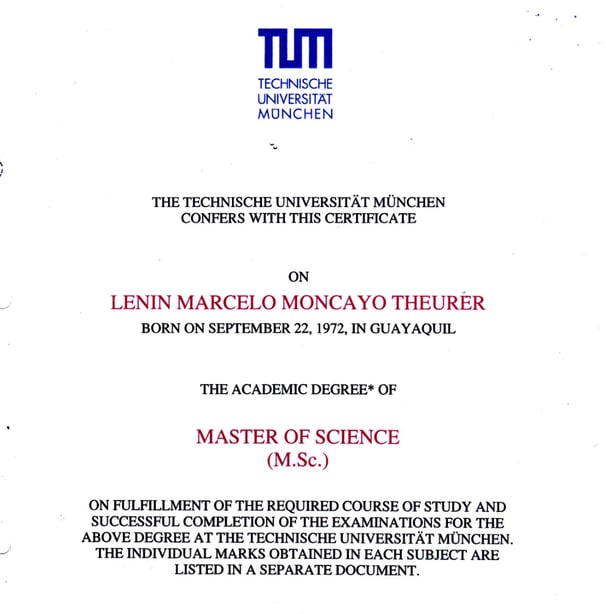
My advanced qualifications include a postgraduate degree in Earthquake Engineering and a Master of Science in Finite Element Methods from the Technical University of Munich. Additionally a postgraduate on Earthquake Engineering In BRI/Tokyo University